
Cumberland Parole and Probation Compared
Parole and probation both place rules on a person in the community, yet they start from different records. The New Jersey State Parole Board, usually called SPB, handles parole after a state prison term. Probation is imposed by a court and supervised through the New Jersey Judiciary. Neither status means the person is still housed at Cumberland County Jail.
A Cumberland County jail release may lead to probation if the judgment says so. A release from South Woods or Bayside may lead to parole. Physical release is one event; the end of legal supervision is another. The NJDOC maximum term can extend through the period when SPB still has jurisdiction.
| Point | Parole | Probation |
|---|---|---|
| Source | Release from a prison sentence under SPB authority | A court judgment or order |
| Agency | New Jersey State Parole Board | New Jersey Judiciary probation services |
| First public record | NJDOC history and SPB material | PROMIS/Gavel and the court file |
| End point | Parole discharge or maximum-term completion | Court-ordered completion or discharge |
A label should be read in context. “Released” in an NJDOC or SPB record may mean released to parole, not fully discharged from all state control. A Cumberland court judgment may impose probation without any state-prison stay.
- Parole
- Conditional community supervision after release from a prison term.
- Probation
- Court-ordered supervision that may follow a jail stay or serve instead of prison.
- Discharge
- The formal end of the relevant custody or supervision authority.
- Absconder
- A supervised person alleged to have stopped reporting or left supervision without permission.
- Revocation
- A decision ending parole status and returning the person to custody after required proceedings.
Verify Cumberland Post-Release Supervision
No official public person-by-person SPB supervision search was found. Verification starts with the record family that created the status. Use a full name and, when available, an SBI number, docket number, date of birth, or custody dates to avoid a same-name error.
- Identify whether the custody episode was at Cumberland County Jail or in NJDOC. A county arrest does not automatically create a state parole record.
- For a state sentence, search the NJDOC offender system. Review the latest incarceration history, current facility, Date Out-of-Custody, and later admissions.
- Check the weekly Parole Eligibility Notice for the correct county of commitment. Event strings can include RELEASED, REVOKED, and RET CUSTODY.
- Ask the SPB Public Information Office to confirm present parole supervision and office assignment. Supply enough identifiers for a careful match.
- For probation, search the PROMIS/Gavel criminal case system, then obtain the operative judgment or contact the supervising Judiciary office if the summary is not enough.
- Match the answer to the date in question. An old release event can remain correct even after a later revocation or new admission.
The county’s live jail gateway is a current-custody tool. It cannot show whether a person who left the jail later reported to probation or entered state parole. The broader custody and release-record path is explained on the Cumberland County released inmates home page.
Cumberland Parole Office Confirmation
SPB publishes central contact channels and a live agency-location map. It does not publish a single fixed Cumberland reporting assignment in the research record. An assigned office should be confirmed rather than inferred from the person’s home, commitment county, or release facility.
New Jersey State Parole Board
171 Jersey Street, Building 2
Trenton, NJ 08625
Mail: P.O. Box 862, Trenton, NJ 08625
Phone: 609-292-4257
Email: SPB-Public-Info-Office@spb.nj.gov
The SPB agency-locations map is the official route for current office information. Probation questions belong with the Judiciary office tied to the case, not with this parole contact. A court docket and judgment help identify that route.
The SPB contact page also separates offender information, public information, and fugitive-tip channels. That distinction prevents a records question from being sent as an enforcement report.
The official SPB contact source is shown below with the supervision-confirmation and fugitive-contact routes captured during research.
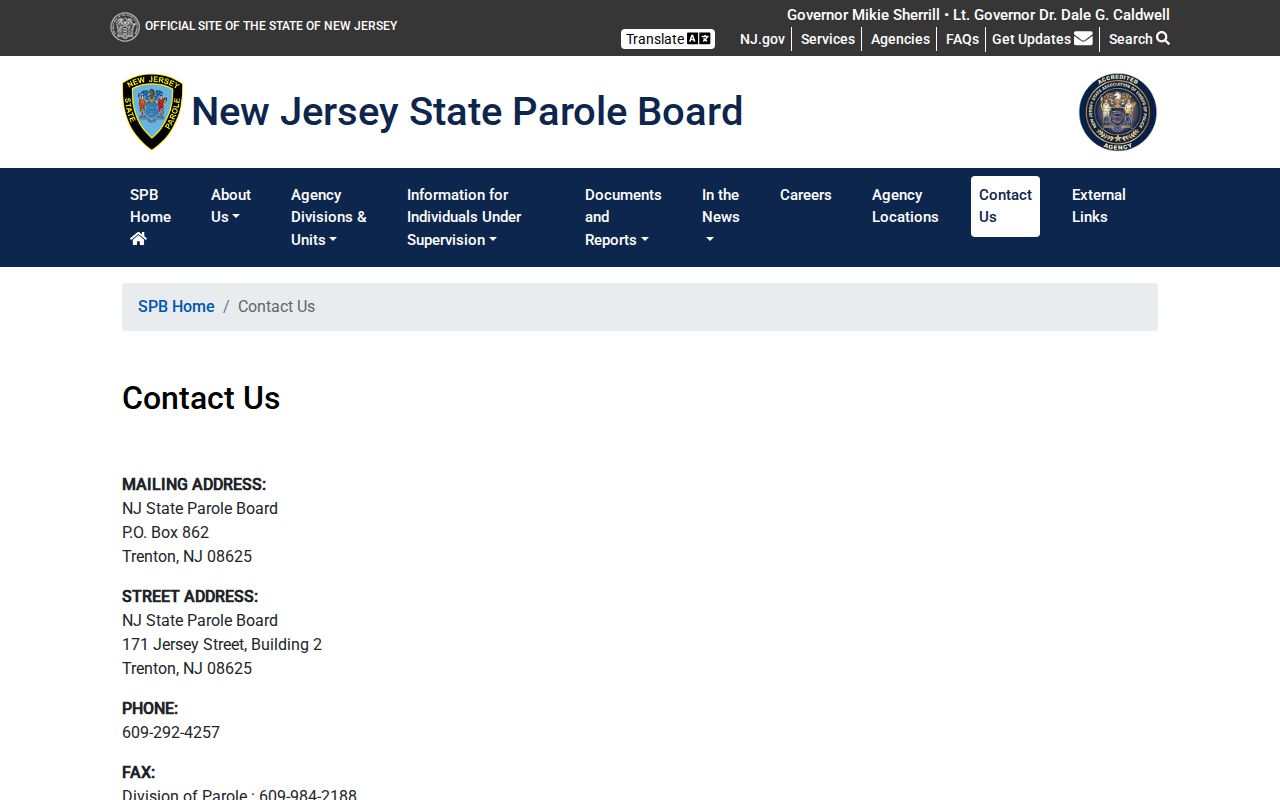
The separate contact paths reinforce why a Cumberland supervision-status request should go to public information, while a fugitive tip serves a different function.
Note: Cumberland County of commitment, current facility, and supervision office are three different facts and may point to different places.
Cumberland Supervision Returns to Custody
Conditions are the rules attached to parole or probation. They can include reporting and other case-specific duties. A public page should not guess at a person’s conditions. The operative SPB or court record controls.
When a parole officer has probable cause to believe serious or persistent noncompliance occurred, SPB says an arrest may follow. The person often enters a county jail and then moves to NJDOC’s Central Reception and Assignment Facility for preliminary and revocation proceedings. A historical Cumberland release can therefore coexist with a valid later custody record.
The weekly eligibility notice helps reconcile the sequence. A RELEASED entry, followed by REVOKED or RET CUSTODY, should not be reduced to a single current-status claim. SPB’s hearing process includes preliminary review and a revocation hearing. Outcomes can continue parole, modify conditions, revoke parole, or set a new Future Eligibility Term. That term is the interval before renewed parole consideration.
The notice is published by county of commitment, not by the county where a person is now housed. A Cumberland block can include a person at a prison elsewhere, while a person at South Woods may appear under another county. Entries can include an alias, SBI or parole number, sentencing judge and date, sentence, minimum term, jail credit, current location, offense, and indictment details. Match those facts before using an event string. The weekly notice is not a list of exact hearing appointments, rooms, or panel times.
No official person-level parole decision database was found. If a named result remains unclear, use NJDOC history, the SPB Public Information Office, or an SPB OPRA request for a disclosable record. Aggregate agency reports do not answer an individual status question.
SPB lists SPB-Fugitive-Tip-Submit@spb.nj.gov for anonymous tips. No public searchable absconder database was found. A missing supervision result, missed call, or rumor is not evidence that someone absconded.
Cumberland Supervision Discharge Records
Supervision ends through the governing agency or court, not merely because time has passed since physical release. For parole, compare NJDOC’s maximum-term and history fields with SPB confirmation. For probation, use the court’s judgment, later orders, and supervising Judiciary record. “Date Out-of-Custody” proves departure from one custody period. It does not, by itself, prove parole discharge.
An SPB records request can seek a particular decision or status record where it is disclosable. The SPB documents and records page provides its public material and OPRA route. Confidential victim, medical, security, juvenile, and other protected information may be redacted. For probation, request the specific court record rather than asking SPB to research a Judiciary status.
PROMIS/Gavel can supply the public trail for an indictable Cumberland case, including dismissal, plea, conviction, sentence, jail credit, probation, or later review. The public summary may not contain the operative order. In that event, ask the court clerk for the judgment or later discharge order. A court sentence explains the legal basis, while the supervising office confirms whether the probation term is still active.
New Jersey’s ordinary parole framework appears in N.J.S.A. 30:4-123.51. The No Early Release Act, N.J.S.A. 2C:43-7.2, applies an offense-specific minimum to enumerated crimes and may be followed by parole supervision. It is not a rule that all New Jersey prisoners serve the same percentage. The final record must show whether a person was released to supervision or discharged from jurisdiction.
Cumberland Reentry After Supervised Release
Cumberland County has several local navigation points, and each serves a different role. The county lists Re-Entry Coordinator Eugenio Portalatin at 856-453-4549 on its Incarcerated Person Services page. The Cumberland County Guidance Center describes a Mental Health Justice Involvement program for eligible residents with serious mental illness who are involved with jail, court, or probation. Its listed contact is 856-825-6810 extension 295.
The Guidance Center says staff can follow eligible participants into the community immediately after release. That service can support a transition, but it does not verify probation or parole status. SPB or the Judiciary still supplies the supervision record.
NJDOC also lists Kintock Bridgeton programs as Residential Community Release Programs. A Kintock placement is a structured correctional transition. It should not be called final discharge. The person’s NJDOC history and any later SPB status identify when the correctional placement ended and whether parole followed.
Cumberland Release Account Identification
Cumberland publishes a narrow post-release account rule that matters when a person needs funds after leaving the jail. According to the county inmate accounts page, a released person may withdraw account money Monday through Friday from 9 a.m. to 3 p.m. Picture identification is required. Keefe Commissary’s listed contact is 856-453-4835.
This rule concerns account funds only. The source does not establish a broad property-return schedule, supervision-reporting rule, or release time. A person who lacks the needed identification should call the listed account contact before traveling, while parole or probation reporting questions remain with the assigned agency.
Note: Collecting Cumberland jail account funds is a post-release task, not proof that parole, probation, or all legal jurisdiction has ended.